
Germination temperature
Cool-season peas germinate from about 4 °C (40 °F); beans need at least 16 °C (60 °F); maize at least 10 °C (50 °F) with a wide optimum of 16-35 °C (60-95 °F) (Alabama Extension).
 Visit deodar-seeds.in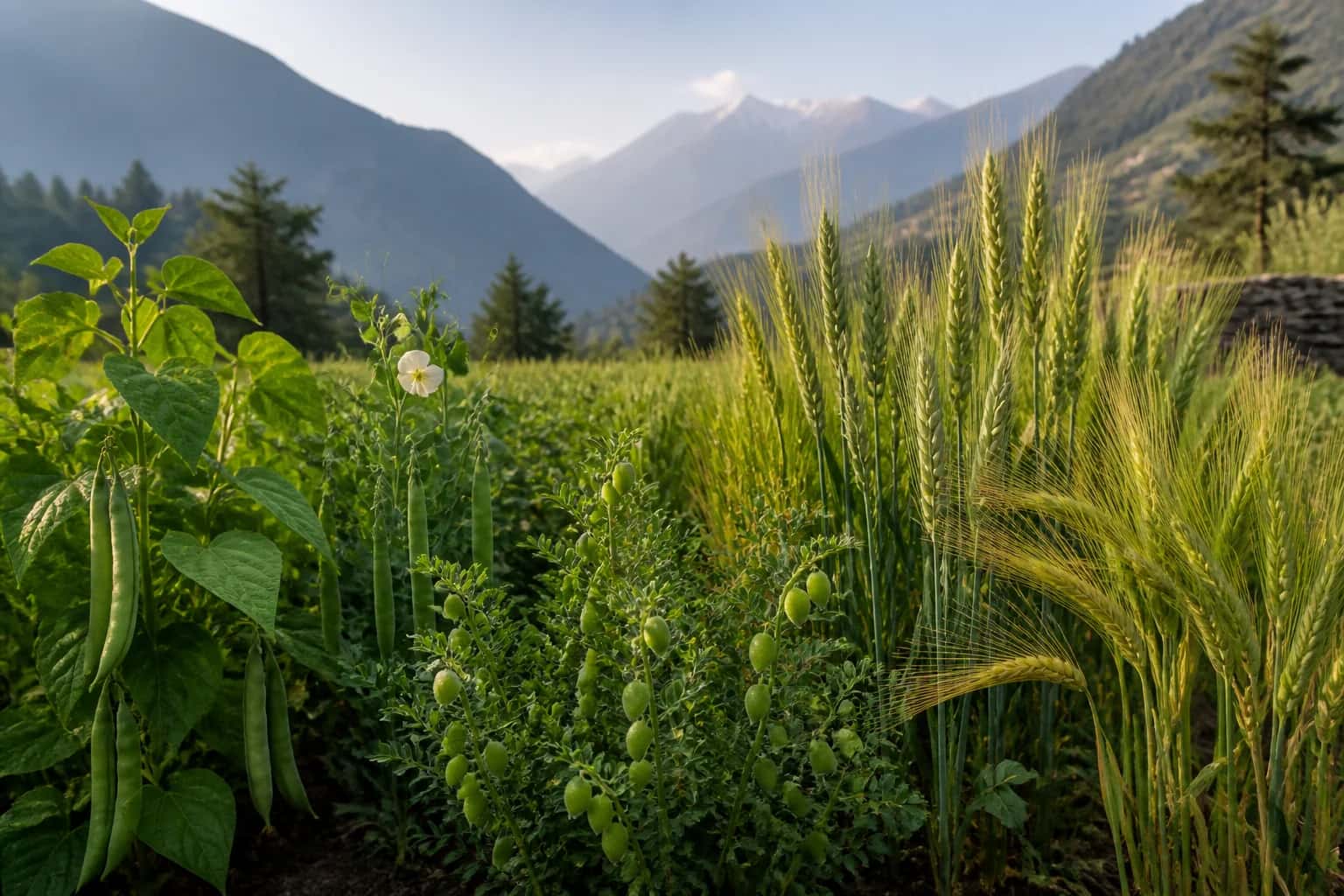
26 growing guides
Beans, peas, lentils, peanuts, maize, millets, rice and grain-like crops such as buckwheat, quinoa and flax, all sown straight into the field or bed.
This topic covers field and garden crops grown for seed, pods or fodder. The legumes include beans, peas, lentils, chickpea, mungbean, adzuki, lablab, guar, horse gram, peanuts, soybeans for edamame and berseem clover; their root nodules host bacteria that fix nitrogen. The cereals include rice, maize, jowar (sorghum), millets, Job's tears and Sudan grass. Buckwheat, quinoa and flax are not true cereals but are grown in a similar way. Almost all are sown directly from large seeds, and the main decision is timing: cool-season crops such as peas, fava beans and lentils, or warm-season crops such as mung, guar, peanut, maize and jowar.
Cool-season peas germinate from about 4 °C (40 °F); beans need at least 16 °C (60 °F); maize at least 10 °C (50 °F) with a wide optimum of 16-35 °C (60-95 °F) (Alabama Extension).
Direct sowing for almost all; large seeds are dibbled or drilled in rows.
Legume seed is often coated with Rhizobium culture just before sowing; in TNAU practice fungicide or biocontrol goes on first, 24 hours before sowing.
India: warm-season pulses and grains in the monsoon season (e.g. green gram June-July in Tamil Nadu), cool-season crops in the post-monsoon winter. Temperate: peas and fava beans in early spring, beans and maize after soil warms.
Open the guide that matches the seed name on your packet.
Short pulses such as green gram mature in about 55-90 days depending on variety (TNAU); grains and long-season legumes take longer.
Large seeds need good soil contact; sow into moist soil rather than watering heavily afterwards.
Coat seed with a Rhizobium culture using a binder such as rice kanji or flour paste, dry in shade, then sow.
Sow warm-season crops only when soil is warm; cold, wet soil rots bean and peanut seed.
Some forage legumes carry hard seed; a light scarification improves even emergence.
Mungbean, adzuki beans, yard long beans, guar (cluster bean), horse gram, lablab, lima beans.
Fava beans, lentils, peas, chickpea.
Peanuts (groundnut), edamame soybeans, flax and linseed.
Rice, maize, jowar, millet, Job's tears.
Berseem clover, Sudan grass, buckwheat, quinoa.
Below about 16 °C (60 °F) bean seed sits and rots.
TNAU warns that chemical fungicides and biocontrol agents are incompatible with each other; treat in sequence and follow product labels.
Rhizobium-coated seed should be shade dried, never left in hot sun, and sown soon.
Large seeds still need to push through; crusted clay soil causes patchy stands.
Pick the crop guide below and sow when the soil suits its season.
Not always, but where the crop has not grown before, a Rhizobium seed coating helps nodules form; it is standard practice in TNAU recommendations for pulses.
No. They are grown and used like grains but are not grasses; they are grouped here for convenience.