
Germination temperature
UF/IFAS gives 21-38 °C (70-100 °F), probably best at 29-35 °C (85-95 °F). Use bottom heat or a clear cover in cool weather.
 Visit deodar-seeds.in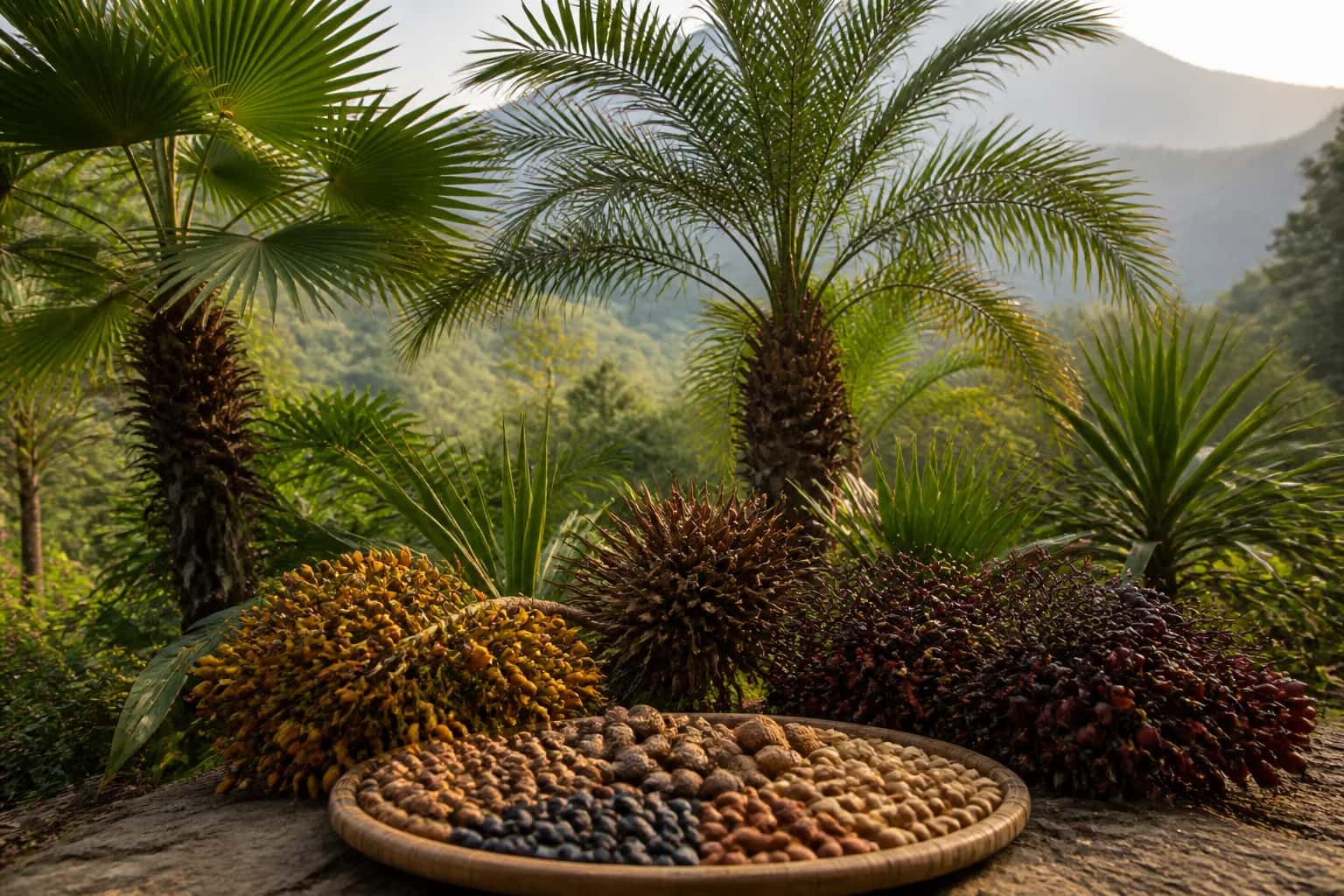
4 growing guides
Palm seed needs steady heat, constant moisture and patience: some species sprout in two weeks, others in months, and germination within one batch is often erratic.
This topic covers palms (family Arecaceae) grown from seed: date palm, Canary Island date palm and Indian wild date palm, Mexican fan palm, and palms in general. Almost all are raised the same way. The fruit pulp is removed, the clean seed is soaked, and it is sown in a deep, well-drained pot kept hot, ideally with bottom heat. Many palms, including date and Mexican fan palm, germinate remotely: a root-like stalk grows deep into the pot before the first leaf appears, so a deep container matters more than a wide tray. Germination time varies hugely between species and is often erratic, with seeds in one pot sprouting weeks or months apart.
UF/IFAS gives 21-38 °C (70-100 °F), probably best at 29-35 °C (85-95 °F). Use bottom heat or a clear cover in cool weather.
Remove all pulp, then soak 1-7 days, changing the water daily, and sow straight away. UF/IFAS advises against gibberellic acid soaks.
Under 2 weeks (Mexican fan palm), 3-4 weeks (areca), 2-3 months (Canary Island date palm), to sporadic over more than a year (parlour palm).
Varies: latan palm seed lasts only 2-3 weeks, areca over a year. Many tropical palm seeds die below about 16 °C (60 °F).
India: the hot months before or during the monsoon. Temperate climates: indoors with bottom heat, any time.
Soak fruits until the flesh softens and rub it off; wear gloves for species with irritant pulp, such as fishtail palms (Caryota).
UF/IFAS prefers pots to flat trays for their deeper soil column and drainage; a 1:1 peat and perlite mix is widely used.
Cover seed with mix if pots stand in sun; in shade sow shallowly, pressing larger seed just into the surface.
Bottom heat speeds germination. Keep the mix evenly moist and leave pots for months before giving up; pot seedlings on at the first leaves.
How to grow date palm from seed (Phoenix dactylifera) and the dates guide cover soaking, deep pots and why seedlings, half of them male, rarely give good dates.
How to grow Canary Island date palm and Indian date palm from seed (Phoenix canariensis, Phoenix sylvestris): reliable, remote-germinating palms.
How to grow Mexican fan palm from seed (Washingtonia robusta): one of the fastest palms, often up in two weeks.
How to grow palms from seed (Arecaceae) and the palm seeds guide give the general method for species without their own guide.
Cool pots germinate slowly or not at all. Aim for 29-35 °C (85-95 °F).
The remote germination stalk of date and fan palms runs out of room. Use deep pots.
UF/IFAS warns that storage after soaking can induce secondary dormancy. Sow immediately.
Erratic germination is normal; keep pots moist and warm for months.
Clean, soak and sow palm seed in deep pots with steady bottom heat, and give it time.
Palms are slow and erratic by nature. Even in warmth some species need months, and seeds in one pot can sprout far apart. Check the temperature first.
It may sprout, but FAO notes that seedling date palms vary, about half are male, and few females give good fruit. Treat it as an ornamental palm.
Open the guide that matches the seed name on your packet.