
Germination temperature
Best 18-35 °C (65-95 °F) soil, optimum about 29 °C (85 °F); little or no germination below 16 °C (60 °F) (Oregon State Extension). RHS gives 18-21 °C (65-70 °F).
 Visit deodar-seeds.in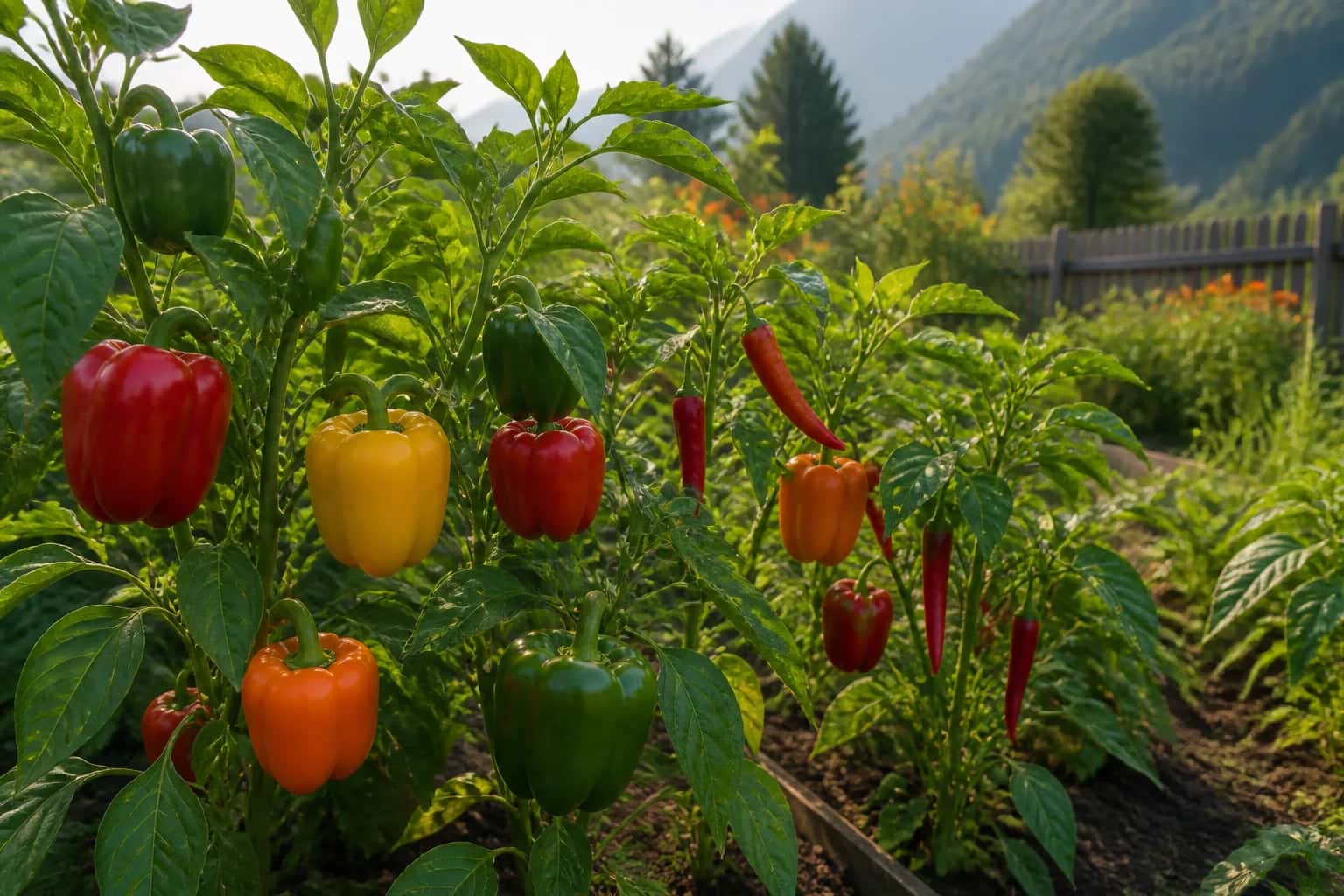
2 growing guides
Sweet peppers and chillies need warmth from sowing to harvest. Raise them as nursery seedlings, transplant at about six weeks and grow them in full sun.
Peppers are frost-tender plants of the nightshade family (Solanaceae), native to the Americas. Sweet (bell) peppers and hot chillies are mostly forms of the same species, Capsicum annuum, and are grown the same way: seed is sown in a warm nursery bed or tray, seedlings are transplanted after about six weeks, and plants crop for months in warm, sunny conditions. Fruits usually ripen from green to red, yellow, orange or purple and grow sweeter, or hotter, as they colour. Peppers are slower and more heat-demanding than tomatoes at every stage, so they need an earlier start in temperate gardens and a warm, sheltered site. In the UK they are usually grown under cover.
Best 18-35 °C (65-95 °F) soil, optimum about 29 °C (85 °F); little or no germination below 16 °C (60 °F) (Oregon State Extension). RHS gives 18-21 °C (65-70 °F).
About 8 days at 25-30 °C (77-86 °F), 12 days at 20 °C (68 °F) and about 25 days at 15 °C (59 °F).
No soaking or cold treatment needed. TNAU coats chilli seed with Trichoderma viride or Pseudomonas fluorescens before sowing.
40-45 days for capsicum in TNAU practice.
Tamil Nadu chilli: January-February, June-July or September-October; capsicum: September-February (TNAU). UK: indoors mid-February to early April (RHS).
Long: TNAU gives 150-160 days for a capsicum crop. In the UK, fruit comes from mid-summer under glass and from August outdoors (RHS).
Sow in raised nursery beds, in lines about 10 cm apart, or in trays, and cover lightly with sand or fine compost. Keep the medium warm until seedlings appear, then grow them on at about 16-18 °C (60-64 °F) or warmer in bright light.
TNAU waters nursery beds daily with a rose can. Water gently and avoid waterlogged, crowded beds, where damping off kills seedlings.
Harden seedlings off and plant them into warm, fertile, well-drained soil. In temperate climates, plant outdoors only when nights stay above 12 °C (54 °F) (RHS); otherwise grow them in a greenhouse, tunnel or pots.
Fruit can be picked green or left to colour fully. Regular picking keeps plants setting new fruit.
The sweet pepper guide covers capsicum and bell pepper: large, mild fruit, a long warm season and support for heavy plants.
The hot pepper guide covers chilli: smaller fruit, nursery practice used on Indian farms, picking green or red, and handling hot fruit with gloves.
Choose by use and climate. Chillies tolerate a range of seasons in India; large bell peppers do best in mild, warm conditions or under protection.
Pepper seed may take about 25 days at 15 °C (59 °F). Sow early in a warm place rather than in cool open ground.
Cold checks growth for weeks. Wait until nights stay above about 12 °C (54 °F), or keep plants under cover.
Damping off thrives in dense, waterlogged seedbeds. Sow thinly in raised beds or trays and water lightly.
Wear gloves when picking or cutting hot fruit and seed, and wash hands afterwards.
Choose sweet peppers or chillies and start them early in a warm, bright spot.
It is rarely worth it. Pepper seed germinates slowly in soil below about 20 °C, so nursery raising and transplanting at about six weeks is the standard method in India and in temperate gardens.
In Tamil Nadu TNAU lists three nursery sowing seasons for chilli: January-February, June-July and September-October. Capsicum is sown from September to February.
Most peppers ripen from green to red, yellow, orange or purple, and this takes time and warmth. Green fruit is edible; leave some on the plant if you want full colour and sweetness.
Open the guide that matches the seed name on your packet.