
Germination temperature
Minimum about 16 °C (60 °F) soil for all main cucurbits; optimum about 32-35 °C (90-95 °F) (Oregon State Extension).
 Visit deodar-seeds.in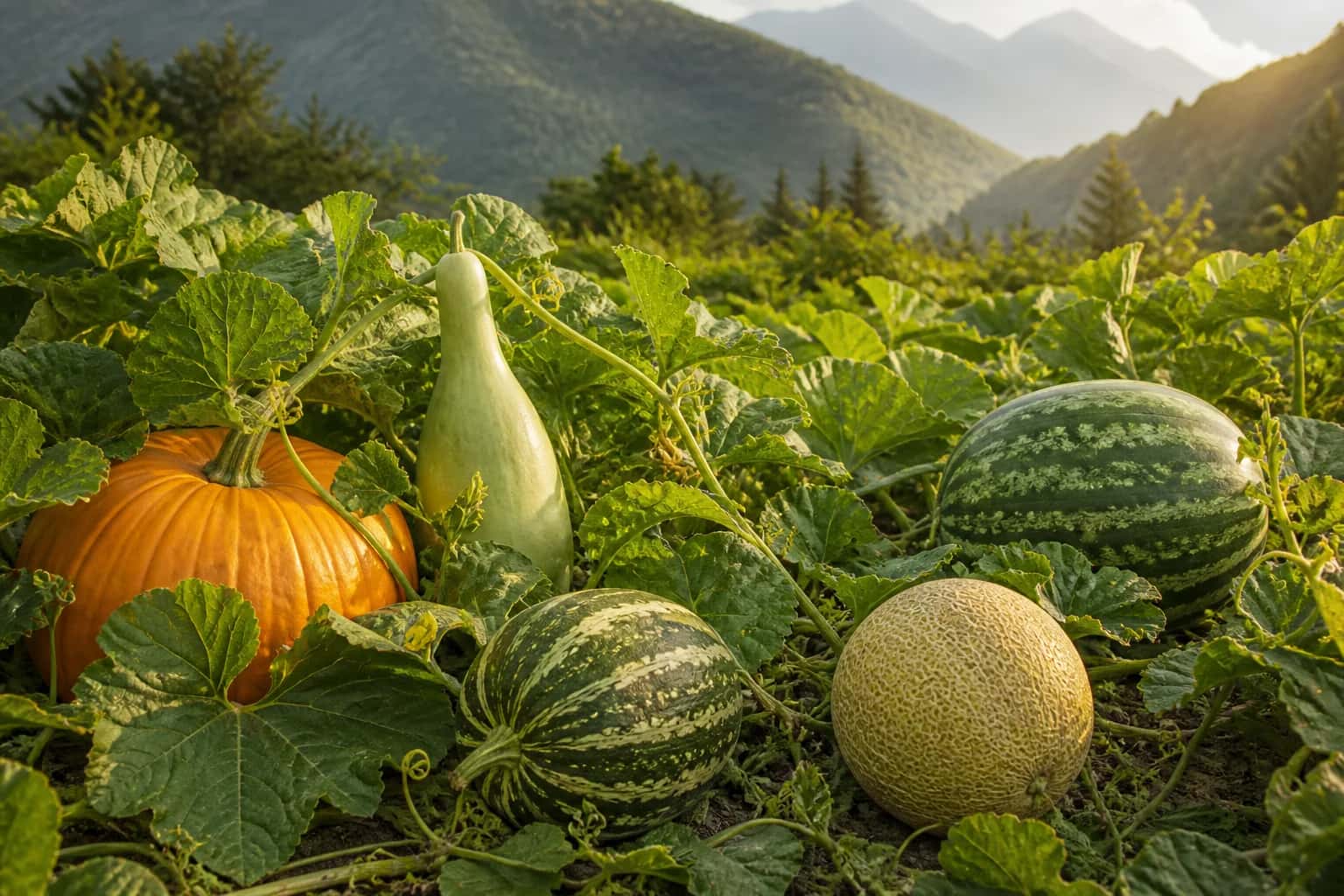
8 growing guides
Pumpkins, melons, cucumbers and gourds share one family and one rule: sow into warm soil, give them sun, space and steady water, and let bees do the pollinating.
This group covers the cucurbits (family Cucurbitaceae): pumpkin and squash, zucchini, watermelon, muskmelon, cucumber and the Indian gourds such as bottle gourd and ridge or sponge gourd, plus the less common creeping cucumber. All are warm-season annual vines with large seeds that germinate quickly in warm soil. They grow fast, need plenty of space or a trellis, and carry separate male and female flowers, so fruit set depends on insect pollination. Their roots dislike disturbance, which is why they are usually sown where they will grow, a few seeds to a pit or hill, and thinned to the strongest plants.
Minimum about 16 °C (60 °F) soil for all main cucurbits; optimum about 32-35 °C (90-95 °F) (Oregon State Extension).
Fast in warm soil: cucumber and muskmelon 3-4 days at 25-30 °C (77-86 °F); watermelon about 12 days at 20 °C (68 °F).
Usually none. Overnight soaking helps hard-coated gourds; TNAU coats some crops with a biological fungicide.
Mostly direct sown in pits or hills; transplants go out young, at up to about four weeks, without root disturbance.
Tamil Nadu: pumpkin June-July or December-January, watermelon November-December (TNAU). Temperate climates: after the last frost, in warm soil.
Varies by crop: TNAU starts pumpkin harvest 85-90 days after sowing; watermelon crops run about 120 days.
Sow only when the soil is warm. University of Minnesota Extension waits for at least 21 °C (70 °F) at 2.5 cm depth for cucumbers; black plastic mulch warms soil earlier.
Sow a few seeds per pit or hill, about 1-2.5 cm deep depending on seed size, and thin to the two strongest seedlings after about two weeks, as TNAU does for pumpkin and watermelon.
Where the season is short, sow in peat or paper pots no more than four weeks before planting out, and plant the whole pot so the taproot is not disturbed.
Allow wide spacing for sprawling pumpkins and melons, or train cucumbers and gourds on a trellis. Remove row covers once flowering starts so bees can reach the flowers.
Pumpkin (Cucurbita moschata) and zucchini and Indian summer squash (Cucurbita pepo): big plants for pits or hills, harvested mature or young.
Muskmelon and watermelon need the most heat and a dry, sunny ripening period; the guides explain how to tell when fruit is ripe.
The cucumber guide covers field and trellis growing; creeping cucumber (Solena amplexicaulis) is a perennial climber grown for small fruit.
Bottle gourd (lauki) and ridge and sponge gourd (Luffa) are vigorous climbers best grown on a pandal or trellis; their seeds benefit from soaking.
Below about 16 °C (60 °F) seed rots instead of germinating. Wait for warm soil or warm it with black plastic.
Old, pot-bound or bare-root transplants establish poorly. Sow direct or use plantable pots and transplant young.
Male flowers usually open first, and cold, wet or cloudy weather reduces bee visits. Be patient and keep covers off during flowering.
Crowded vines invite powdery mildew and give small fruit. Thin to two plants per pit and keep spacing generous.
Pick a cucurbit for your space, sow it into warm soil and give it room to run.
Direct sowing is usual. If the season is short, sow in plantable pots up to four weeks before planting out and set out the whole pot to avoid root damage.
Cucurbits carry separate male and female flowers and need insects to carry pollen between them. The first flowers are often male, and poor weather reduces pollination.
Most cucurbit seed germinates without treatment in warm soil. Overnight soaking can help thick-coated gourd seed, such as bottle gourd.
Open the guide that matches the seed name on your packet.