Visit deodar-seeds.in


About this variety
Which black cumin is this?
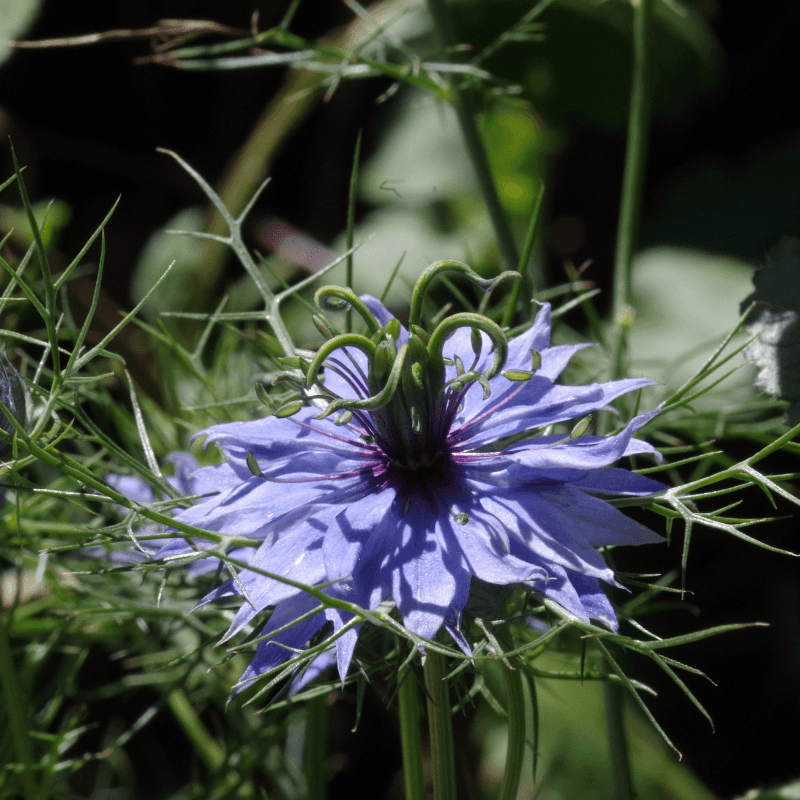
Nigella sativa, called kalonji in Hindi and black cumin, black seed or black caraway in English. It is not cumin: jeera (Cuminum cyminum, sold separately as our Jeera, Cumin Seeds) belongs to the Apiaceae, while Nigella belongs to the Ranunculaceae and has very black seeds that resemble onion seeds.
The name kala jeera is used for more than one spice, and shah jeera (Bunium persicum) is a different plant again, so go by the Latin name when you compare packets.
Germination temperature
Nigella germinates best in cool weather: the optimum daytime temperature is 12–18 °C, and germination declines once it rises above 25 °C.
Sowing depth and spacing
Sow 5–15 mm deep, depending on soil moisture. Rows 25–60 cm apart with plants 5–15 cm apart in the row suit a target of 40–60 plants per square metre.
Soil
Loamy or sandy soil that drains well and is rich in organic matter. The ideal pH is 7.0–7.5, and plants still grow between pH 5.0 and 8.5.
Days to harvest
Allow 140–186 days from sowing to harvest, depending on variety, daytime temperature and soil moisture. The Rajasthan variety Ajmer Nigella-20 flowers 85–90 days after sowing and matures in 145–150 days.
What goes wrong
Foot and root rot is one of the most serious problems in kalonji. Avoid overhead irrigation that keeps the canopy wet, and on poorly drained ground form raised beds.
When to sow around the world
Kalonji is a cool-season crop: sow it in spring in cold-winter climates and in autumn or winter in warm-winter regions, so that flowering and seed set fall in cool, moist weather rather than in heat.
- Cold-winter climates in Europe: in the UK, sow outdoors in mid-spring or in autumn; the plant is rated hardy through most of the UK. In the warm parts of central Europe, sowing starts from the end of March on light, warm soils. In a Serbian trial, a mid-April sowing out-yielded mid-March and mid-May sowings.
- Mediterranean and North Africa: in trials in Egypt and in Turkey's Eastern Mediterranean region with sowings on 15 October, 1 November and 15 November, 15 October did best in Egypt, and in Turkey delaying sowing too long harmed growth. Early spring frosts and high May temperatures reduced flower fertilisation in the Turkish trial.
- Subtropical lowlands, such as South Punjab in Pakistan: a 1 November sowing gave the highest grain yield, ahead of 15 October and 15 November sowings.
- Southern Hemisphere, Queensland and the Northern Territory: sow from late April to mid-May, as temperatures cool. Winter is the dry season in Central Queensland and the Katherine region, so irrigation is needed to maximise yield.
Also known as
Kalonji, Kalaunji, Kala jeera, Nigella, Black seed, Black caraway, Black cumin, Nutmeg flower, Schwarzkümmel, Cumin noir, Chernushka, Habbah al-baraka and Çörek otu.