Visit deodar-seeds.in


About this variety
Plan for 3–10 m of vine and a long warm season
Sword bean is a woody climber 3–10 m long, often grown as an annual. The Plant Resources of South-East Asia (PROSEA) volume on vegetables says it grows well at 20–30 °C, from sea level to 1000 m, and requires a tropical climate. Young pods are ready 3–4 months after sowing; mature seeds take 5–10 months. Where warm weather is shorter than that, expect only young pods.
Sowing
The seed is large, 2–3.5 cm long, with a very tough, thick coat. Soak it in room-temperature water; abrade a small point only if the coat stays hard and does not swell. Sow 5–7.5 cm deep in a deep individual pot with loose, free-draining medium, and keep it warm and evenly moist. Give the shoot a support as soon as it starts to extend. PROSEA reports that the seed germinates readily.
Space and support
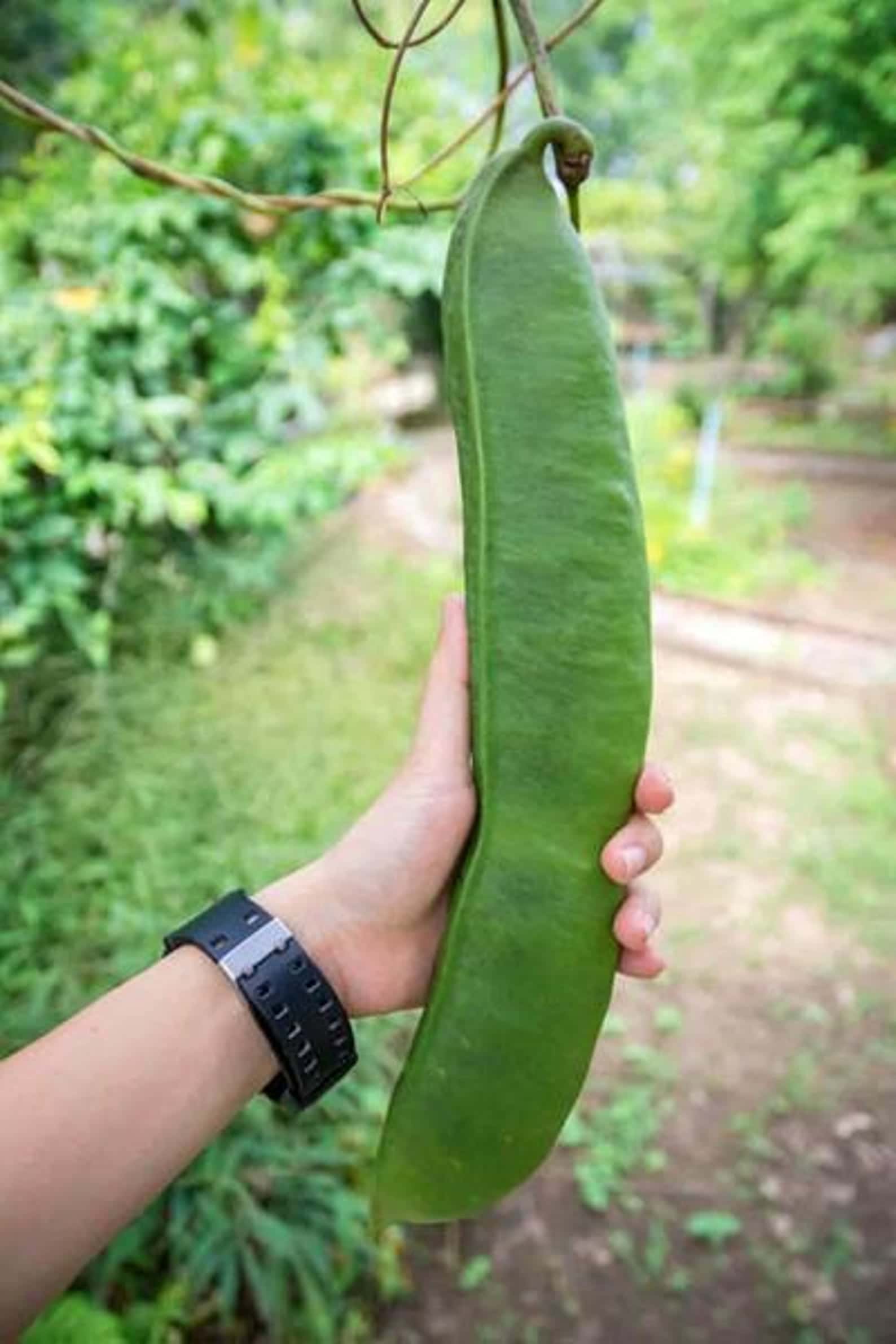
Set plants 45–60 cm apart in rows 75–90 cm apart. PROSEA describes sword bean trailing over walls, fences and trees, so provide a trellis or fence it can climb. Pods are 15–40 cm long and 2.5–5 cm wide, with 8–16 seeds each.
Soil and water
It grows on leached, nutrient-poor tropical soils and on acid soils of pH 4.5–7.0. A deep root system lets it survive dry spells, but PROSEA gives 900–1500 mm of evenly spread rain a year as the range where it does best.
Eating the crop
PROSEA states that dry, fully mature seeds should be eaten with caution because they may be somewhat poisonous, and that removing the toxins by changing the cooking water, soaking or fermenting is possible but laborious. Young pods are cooked as a green vegetable. This listing is for growing; it makes no claim that any part is safe to eat. Check local rules before planting outdoors, because tropical legumes can spread.
Also known as: Sword bean, Bara sem, Natamame, Dao dou, Kacang parang, Haricot sabre, Pois sabre and Dolichos gladiatus.