Visit deodar-seeds.in
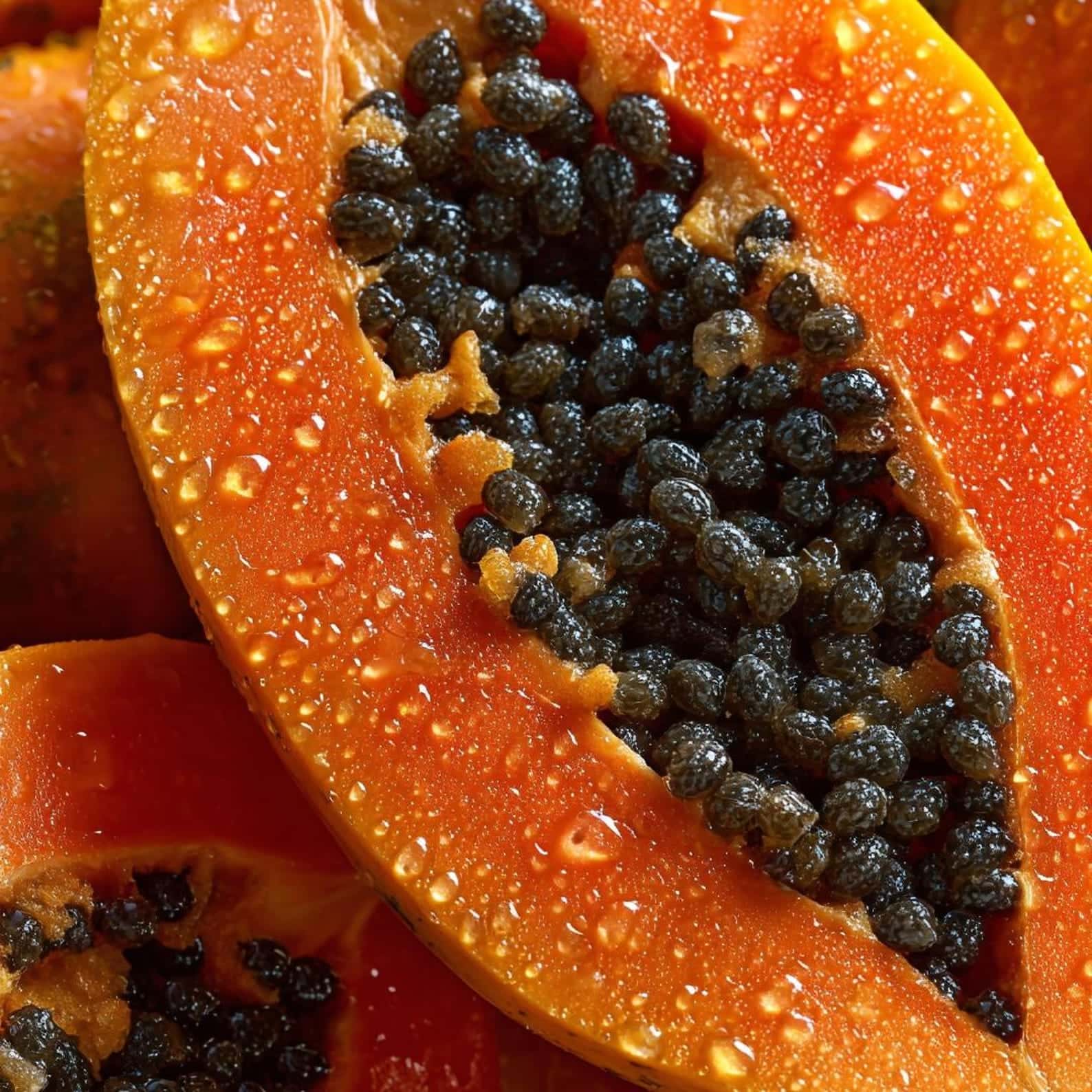


About this variety
Sow warm and shallow
Papaya seed likes warmth. Researchers in India report that nursery seedlings thrive at 26–30 °C and that very high or low temperatures work against germination. In their trials, seed sown 1 cm deep in polybags came up in about 8–10 days in the warm June–July season and took about 24 days when sown in January. ICRAF gives 2 to 4 weeks under favourable conditions. Sowing 3 seeds per bag and thinning is the usual practice.
If the seed still has its gelatinous coat (the sarcotesta), soak it for 24 hours and rub it off gently. In the same trials, seed with the coat removed germinated 81% against 73% with the coat on, and came up about three days sooner.
Frost and water are the limits
ICRAF says papaya is not frost hardy: frost or cold wind usually damages the leaves, and the tree can die. Its roots are very sensitive to waterlogging, and even short flooding can kill the plant, so use a well-drained, fertile loam, neutral to slightly acid, in a warm spot sheltered from wind. It grows below about 1600 m where mean annual temperature is 21–33 °C.
Plan for males, females and hermaphrodites
Seed-grown papaya produces female, male and hermaphrodite flowers, and which one a tree shows can depend on season or age. Tamil Nadu Agricultural University keeps only one vigorous female or hermaphrodite plant per planting pit and, once flowers show, removes male trees while leaving one male for about every 20 females. Plant three or four seedlings per spot at first so you can choose.
Timing and spacing
In India, Tamil Nadu Agricultural University gives June to September as the best planting season and ready seedlings after about 60 days, planted 1.8 m apart each way in pits of 45 cm. ICRAF reports fruit production starting within a year of planting, on a tree 2–10 m tall that is usually unbranched.
What the packet is
The packet holds 50 or 100 seeds of Carica papaya. Fruit shape, size and taste of seed-grown plants are not promised, and no germination percentage is claimed for this lot.
Also known as: Papita, Tree melon, Melon tree, Lechosa, Fruta bomba, Mamão, Papaye, Melonenbaum, Malako and Papaya carica.