Visit deodar-seeds.in
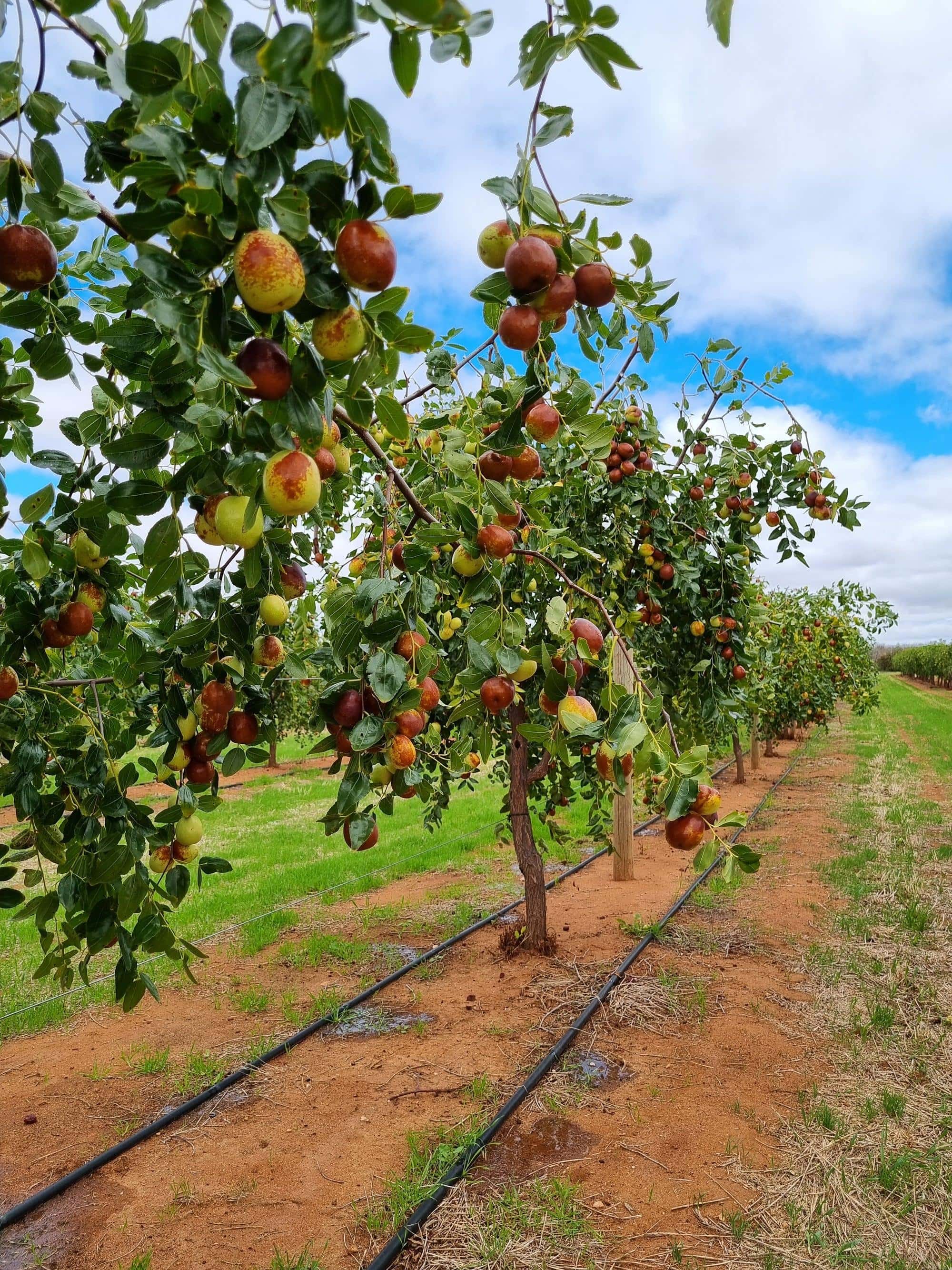



About this variety
Chinese jujube, Ziziphus jujuba, is a deciduous fruit tree valued for its small red-brown fruits and its ability to grow in sunny, comparatively dry garden settings once established. It is also known as Chinese date or red date.
Also known as: Hong zao, Unab, Azufaifo, Jujubier, Giuggiolo, Brustbeere, Unabi, Hünnap, Zizyphus vulgaris and Ziziphus sativa.
Seed-grown plants are useful for orchard experiments, edible landscape projects and botanical collections, but seedlings will not necessarily reproduce the exact fruit qualities of a named parent cultivar. No fruiting date, yield or cultivar identity is guaranteed.
Choose a sunny position with freely draining soil. Young plants need regular moisture while roots establish, but avoid keeping pots waterlogged. Jujube is grown in warm temperate and subtropical regions; protect young seedlings from severe cold until established and acclimate them gradually before planting outdoors.
The hard stone around jujube seed can delay germination. University of Florida guidance notes that seed propagation commonly uses moist cold stratification for 90 to 120 days at about 4 C, while New Mexico State University reports that stratification makes germination easier and more reliable. Place the cleaned seed in a barely moist, sterile medium in a labelled bag, chill it, then sow in a clean, free-draining mix. Warmth after stratification may improve emergence. Keep the medium evenly moist and be patient, as seedlings can emerge irregularly.
Move young plants into individual pots once they are easy to handle, and increase sun gradually.
You will receive seeds only; no fruit, plant or growing container is included.