
True to type
Seed does not reliably reproduce the parent variety; named fruit varieties are propagated by grafting or budding (Penn State Extension).
 Visit deodar-seeds.in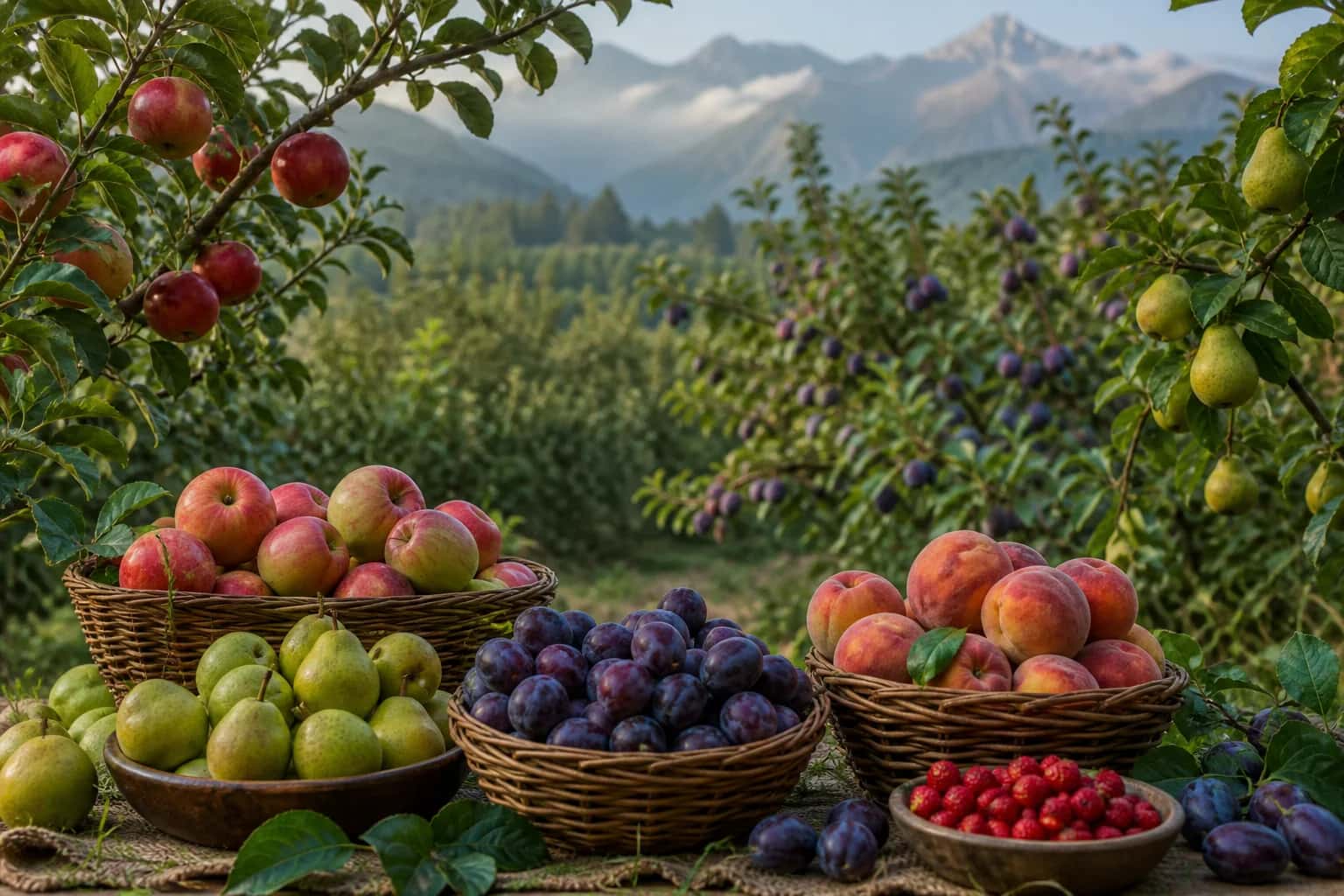
38 growing guides
Fruit trees, shrubs and berries, from apple and apricot to mango, papaya and dragon fruit, raised from seed. Seedlings are good for rootstocks, hedges and experiment, but rarely copy the parent fruit.
This topic covers fruiting plants grown from seed: temperate trees such as apple, pear, cherry, plum, apricot and peach; tropical and subtropical trees such as mango, jackfruit, lychee, guava, sapodilla, citrus and amla; berries such as strawberries, raspberries, currants and goji; and climbers or herbaceous plants such as dragon fruit and wild seeded banana. A few, such as soapnut, are grown for uses other than eating. The common thread is genetics: most fruit seedlings vary and do not reproduce the parent variety, which is why commercial trees are grafted or budded. Seed handling splits into two camps: temperate seed that needs a cold period, and tropical seed that must be sown fresh.
Seed does not reliably reproduce the parent variety; named fruit varieties are propagated by grafting or budding (Penn State Extension).
Apple, pear and stone-fruit seed needs moist chilling: about 1-10 °C (33-50 °F) for roughly 60-140 days depending on species.
Many tropical fruit seeds tolerate neither drying nor chilling and lose viability within days or weeks; FAO notes mango is damaged below about 3-6 °C.
Temperate: chill over winter and sow in spring, or sow outdoors in autumn. Tropical: sow as soon as fruit is ripe, in warmth.
Usually several years for trees; berries and papaya are quicker. Individual guides give species ranges.
Remove all pulp, which can rot or carry inhibitors. Sow tropical seed straight away; store temperate seed dry and cool until chilling.
Mix temperate seed with barely moist peat, sand or paper and keep it in the refrigerator for at least 60 days before spring sowing.
Sow single large seeds in deep pots or bags so the taproot is not damaged; sow fine seed (strawberry, fig, dragon fruit) thinly on the surface.
Grow seedlings on as rootstocks for grafting, as hedges, or to trial new types.
Apple, pear, cherry, plum, apricot, peach, persimmon, jujube, white mulberry.
Mango, jackfruit, lychee, sapodilla (chikoo), salak, bael, annona.
Papaya, guava, pomegranate, amla, Manila tamarind, lemon, lime, sweet orange.
Strawberries, raspberries, blackberries, currants, cranberry, goji, goumi, rose hips.
Dragon fruit, seeded wild banana, fig, soapnut (reetha).
Seedlings vary; graft a named variety if you want a known fruit.
Mango, jackfruit or lychee seed left to dry or kept in the fridge usually dies.
Apple, pear and stone-fruit seed sown warm without chilling often fails to germinate.
Sugary pulp rots and invites mould; wash seed clean before sowing or chilling.
Choose your fruit's guide below, then match seed treatment to whether it is temperate or tropical.
Usually not. Seedlings vary from the parent; grafting a named variety onto the seedling gives predictable fruit.
Most tropical fruit seed should be sown within days. It is killed by drying and, in mango's case, by chilling.
Keep it in moist, not wet, peat, sand or paper towel in the refrigerator for at least 60 days, then sow in spring.
Open the guide that matches the seed name on your packet.